Kold
Overview
Weave is the leading software company for dental and veterinary clinics, offering tools for communication, payment processing, scheduling, document management, and marketing.
Led strategy and end-to-end product design for Weave’s Payment Plans product, helping practices collect difficult balances while laying the foundation for future billing infrastructure.
Designing a Recovery-First Cryptocurrency Wallet
In 2018, I partnered with an independent Ethereum developer to explore a cryptocurrency wallet focused on a problem that remains relevant today: how do you protect users from irreversible mistakes and fraudulent transfers?
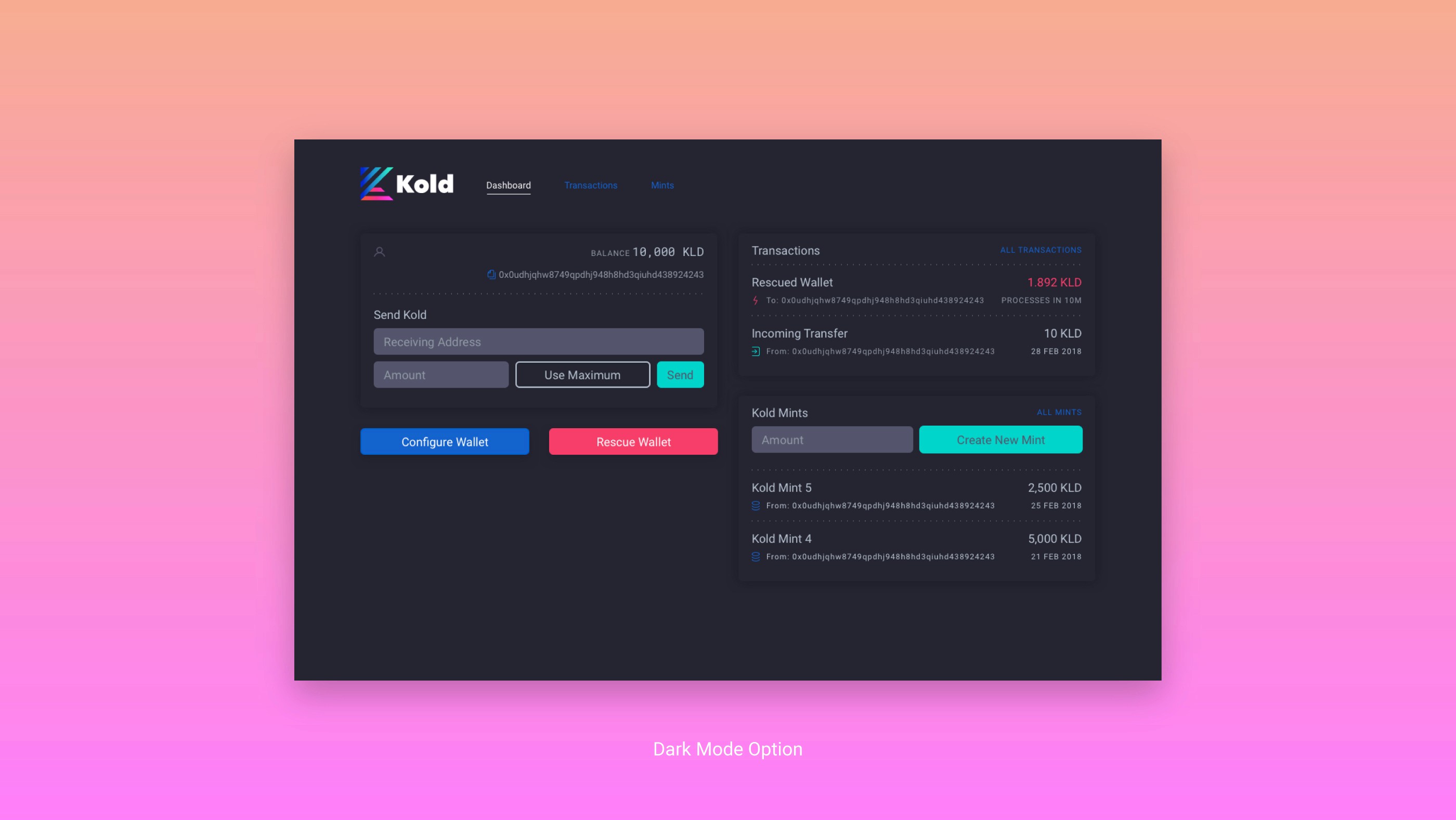
Most wallets prioritized speed and decentralization. Kold explored a different approach, introducing security features such as delayed transaction processing and account recovery workflows that allowed users to intervene before assets were permanently transferred.
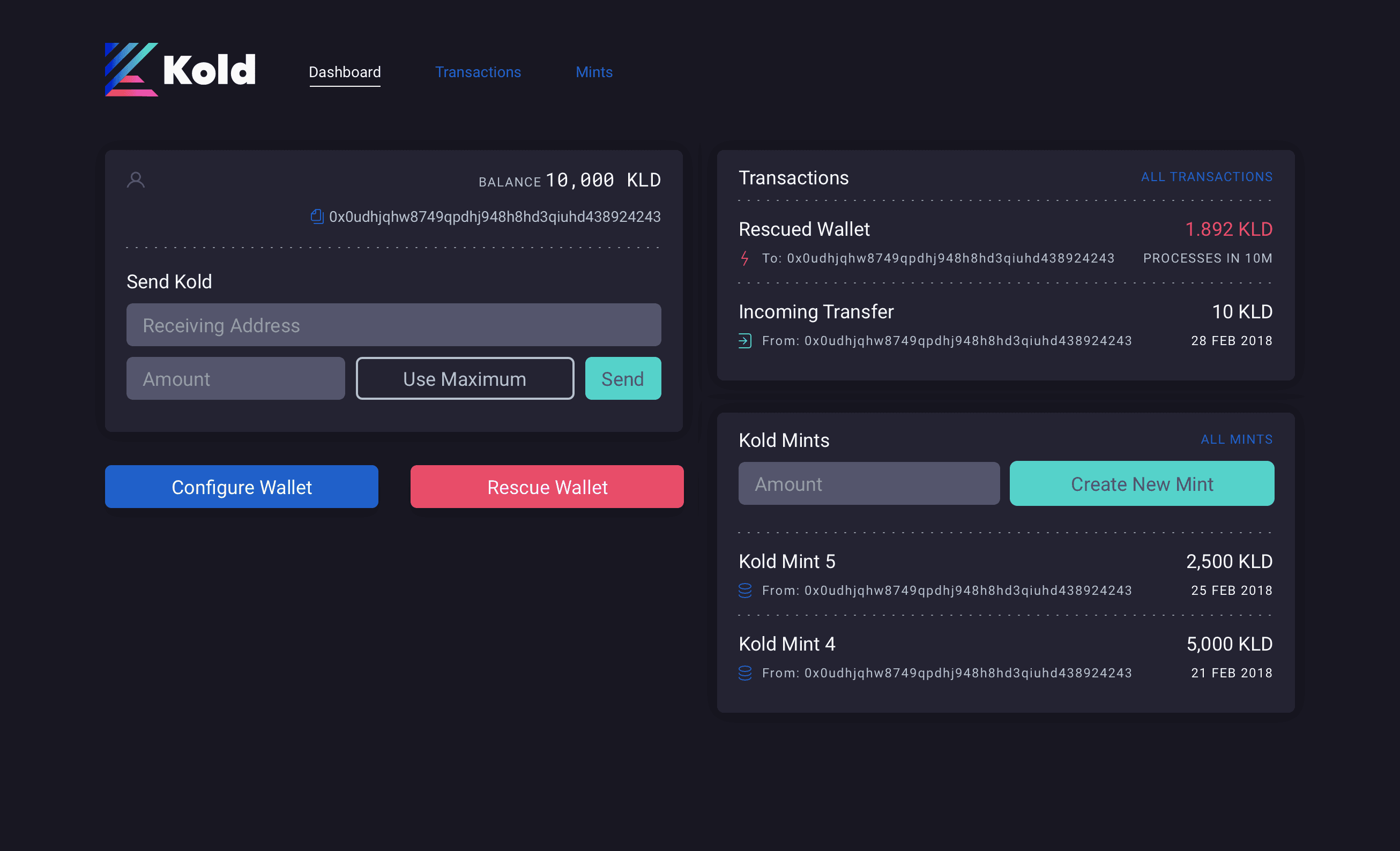
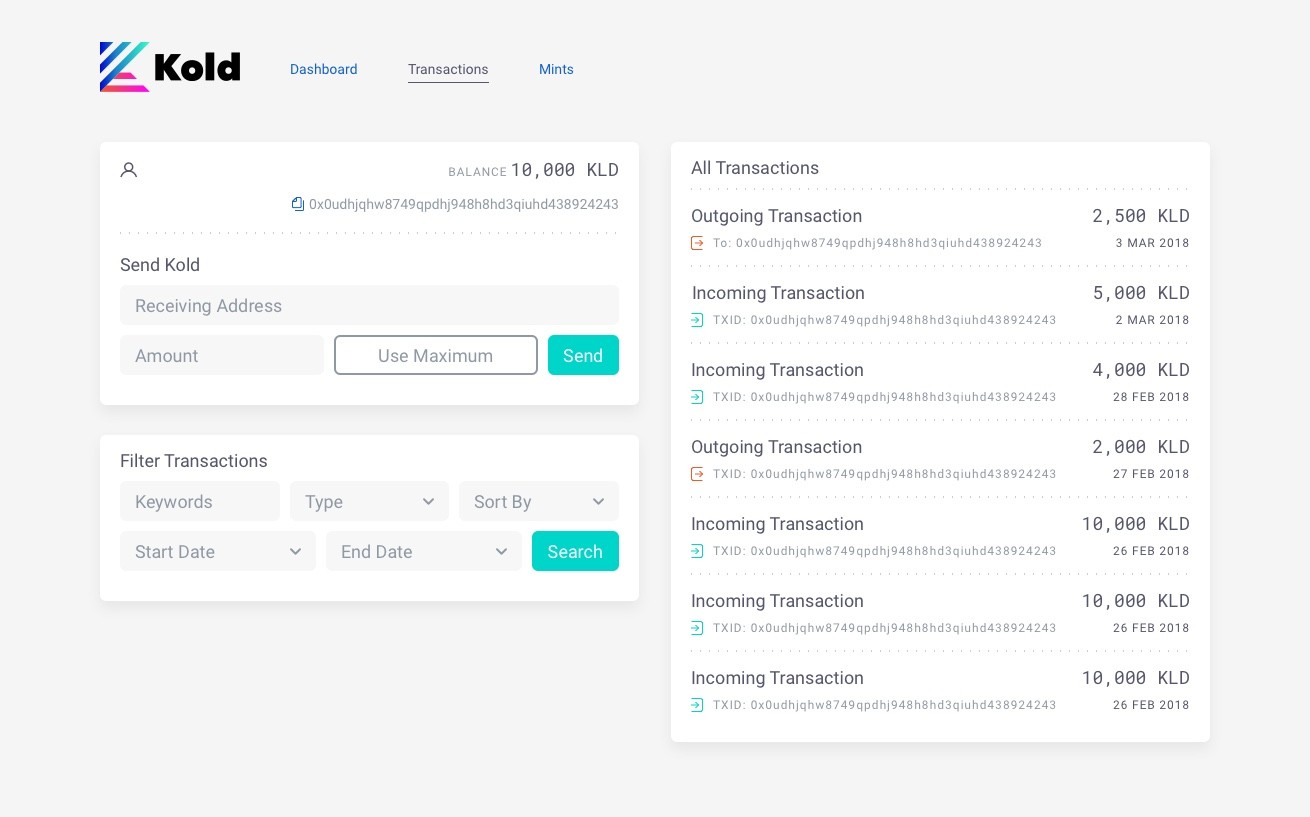
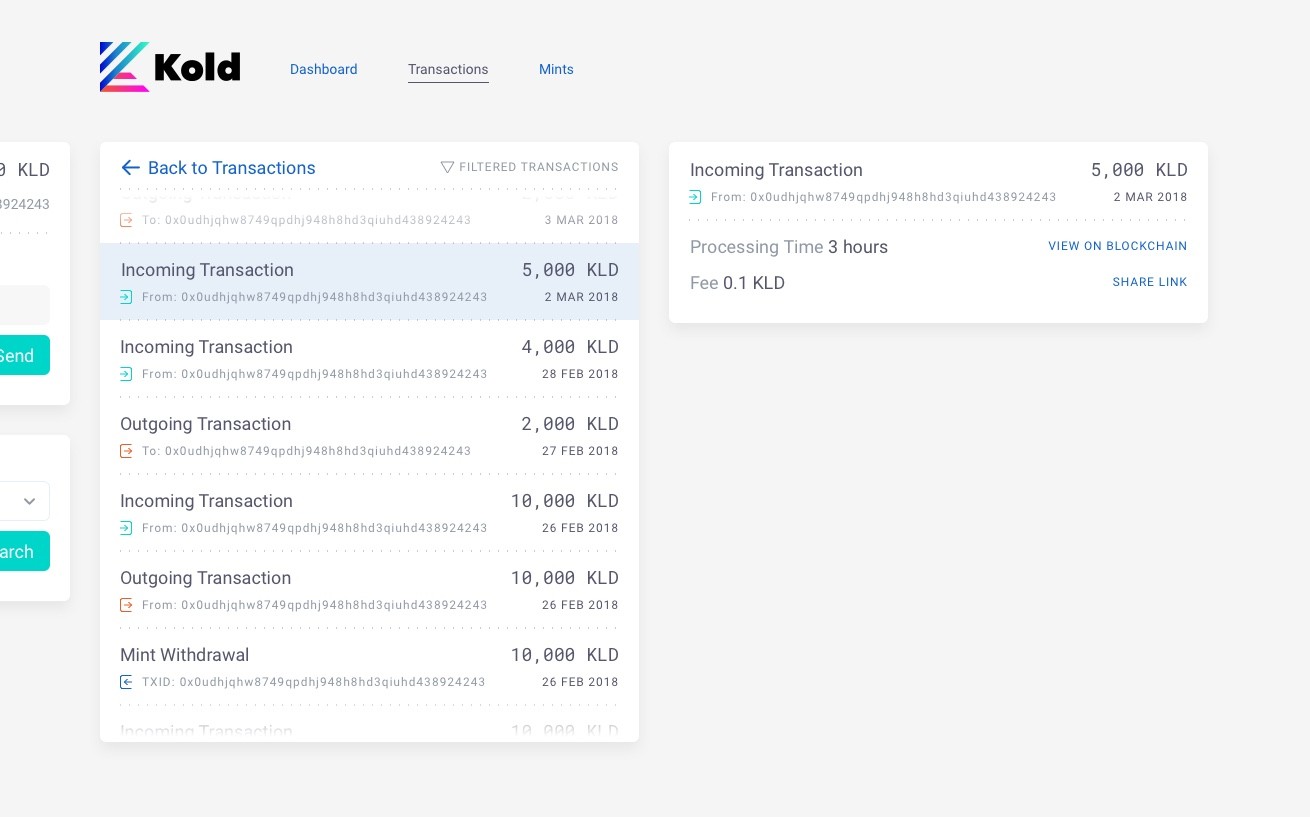
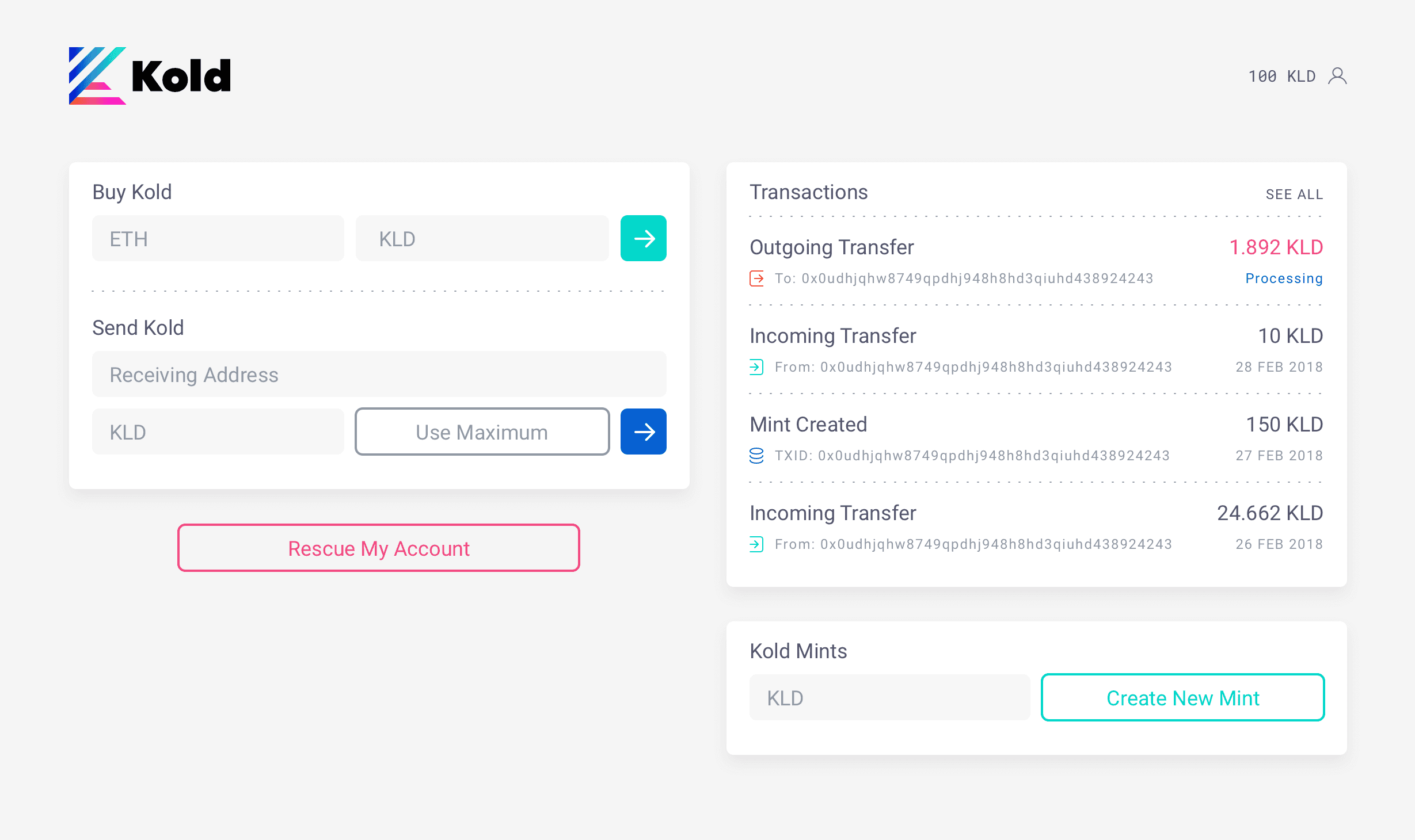
Although the project was never launched, it gave me the opportunity to design a complete crypto product from the ground up, including wallet management, transaction history, token transfers, staking (“Mints”), portfolio tracking, and recovery flows.
The Challenge
Cryptocurrency transactions are typically irreversible. A compromised wallet, stolen private key, or accidental transfer can result in permanent loss of funds.
The goal was to create a wallet experience that preserved the benefits of blockchain technology while providing users with additional layers of protection and control.
My Role
Sole Product Designer
Led product strategy and UX exploration
Designed the complete desktop web experience
Created user flows, wireframes, visual design, and interaction patterns
Partnered directly with the developer to define product behavior and technical constraints
Key Concepts
Delayed Transfers
Users could configure a waiting period before transactions were finalized, creating an opportunity to cancel unauthorized transfers.
The existing billing system tightly coupled payments to requests, making future support for subscriptions and flexible payment models difficult to scale.
I created a future-state architecture that separated payments into a reusable system layer capable of supporting invoices, payment plans, subscriptions, and future billing workflows.
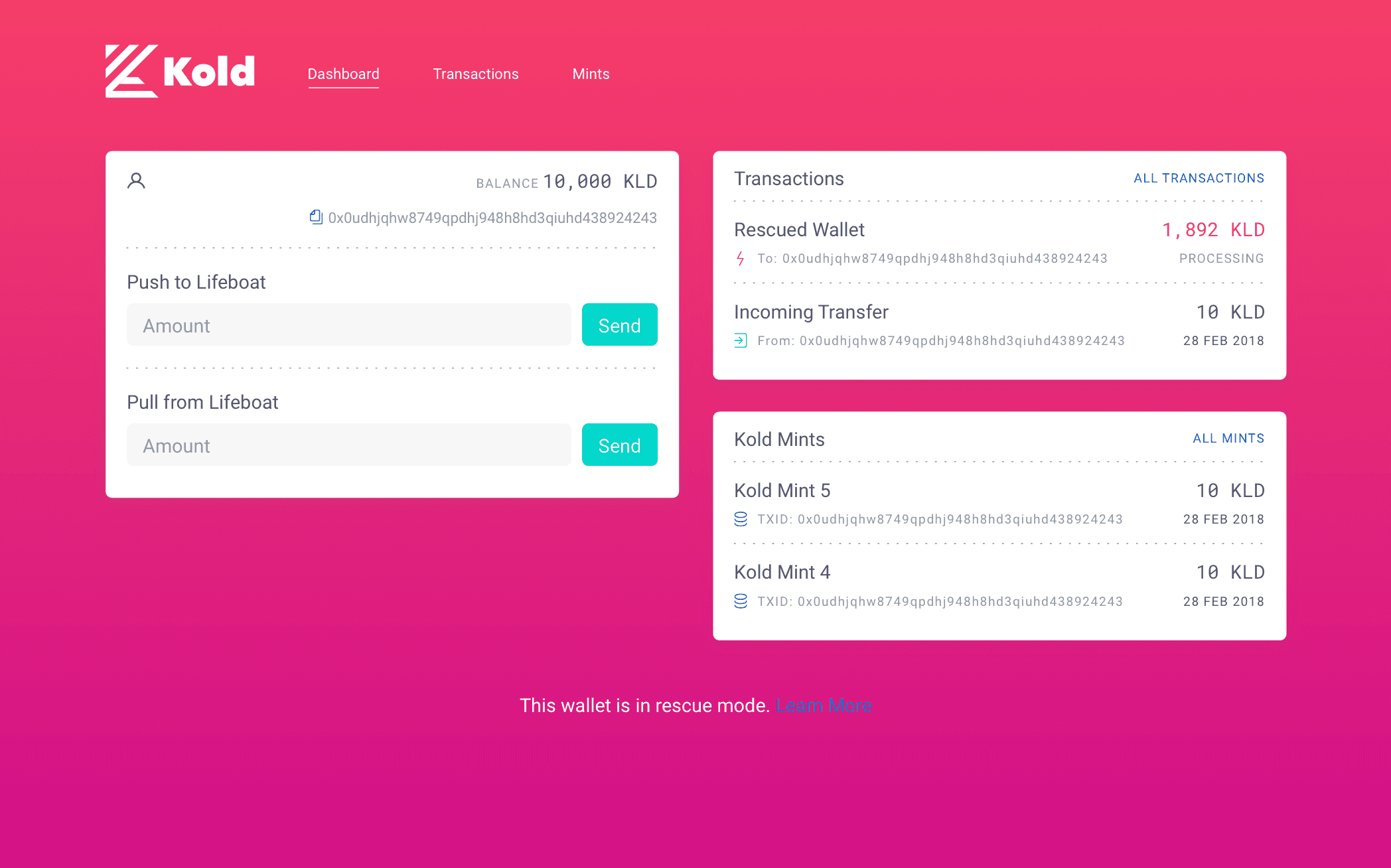
Recovery Mode
Wallets could be placed into a protected state where assets could only be transferred to a pre-approved recovery wallet.
Mints (Staking)
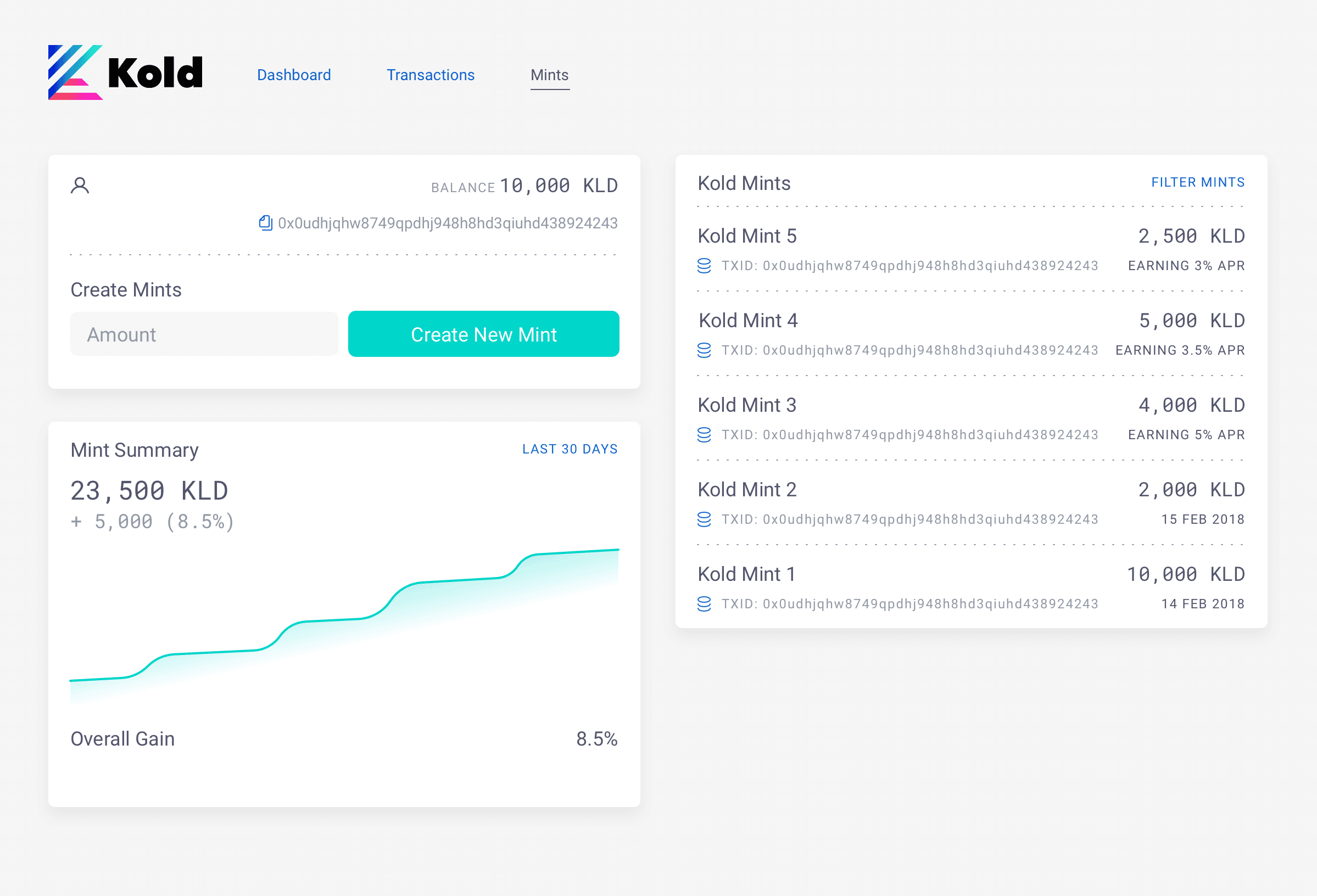
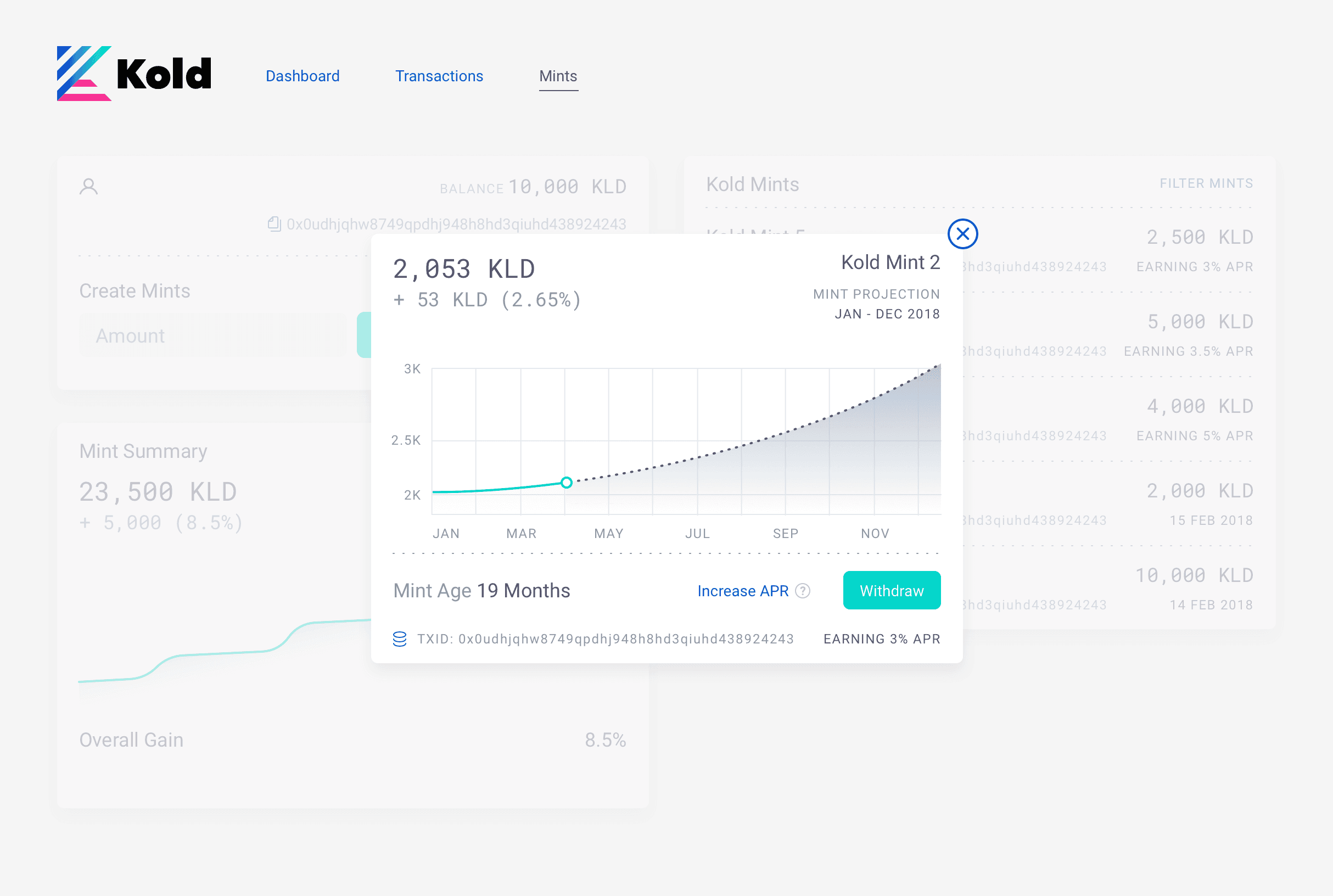
Users could lock tokens into “Mints” that generated returns over time, with projections, performance tracking, and withdrawal controls.
Multi-Wallet Management
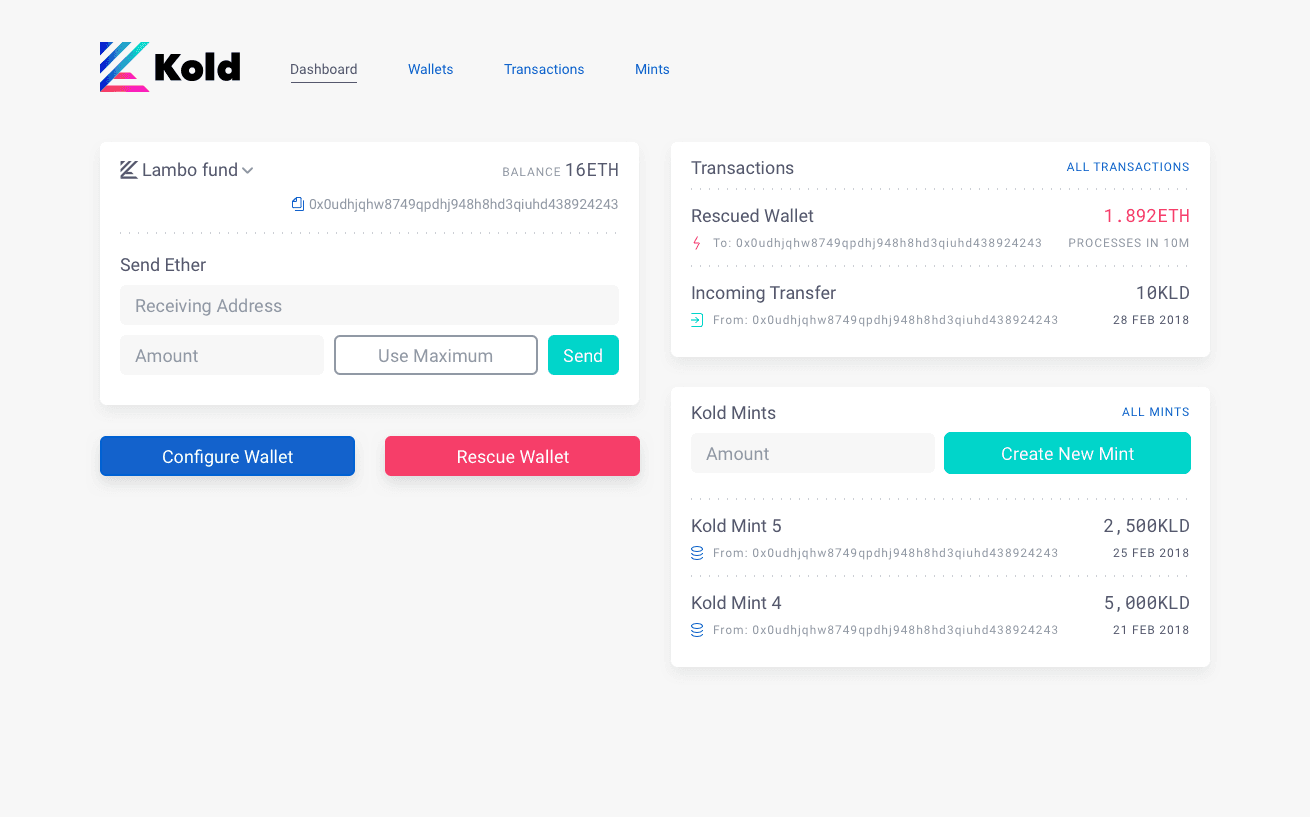
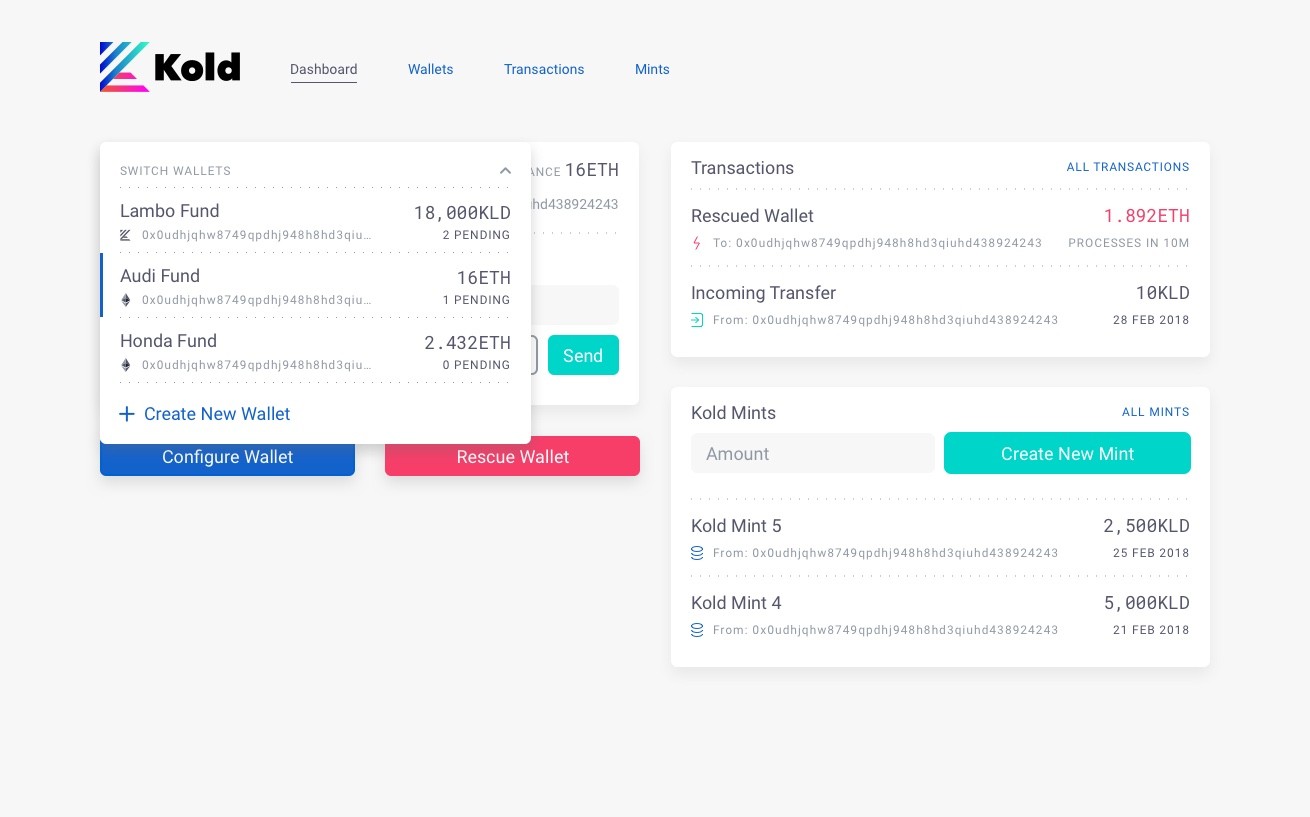
Users could manage multiple wallets and funds from a single interface while maintaining visibility into balances, transactions, and pending activity.
What I Learned
Kold taught me how different crypto products are from traditional fintech experiences. Every action carries higher stakes, mistakes are often irreversible, and trust must be established through transparency, security, and clear system feedback.
Many of the design challenges explored in Kold, including account recovery, transaction confidence, portfolio visibility, and balancing security with usability, continue to be central problems across modern crypto products.