Vyska
AI Powered UX Testing
Overview
Vyska is an AI-powered UX research product that helps builders get fast, actionable feedback on designs, recordings, and prototypes.
Design lead for an AI-first product. Responsible for problem framing, system design, UX strategy, and AI interaction design, with a focus on integrating AI into real product workflows responsibly.
Process
The Problem
UX research is slow, expensive, and often skipped. Existing AI tools promise speed but produce generic, low-trust output that lacks context and practical value for product teams.
The opportunity was not to add AI, but to design a system that understands UX context, intent, and evidence well enough to produce insights teams can actually use.
Design Goals
Make AI outputs actionable, structured, and reviewable
Preserve context across artifacts, tests, and projects
Treat AI as a collaborator, not an authority
Fit naturally into existing product team workflows
Key Design Decisions
AI as a system, not a chat box
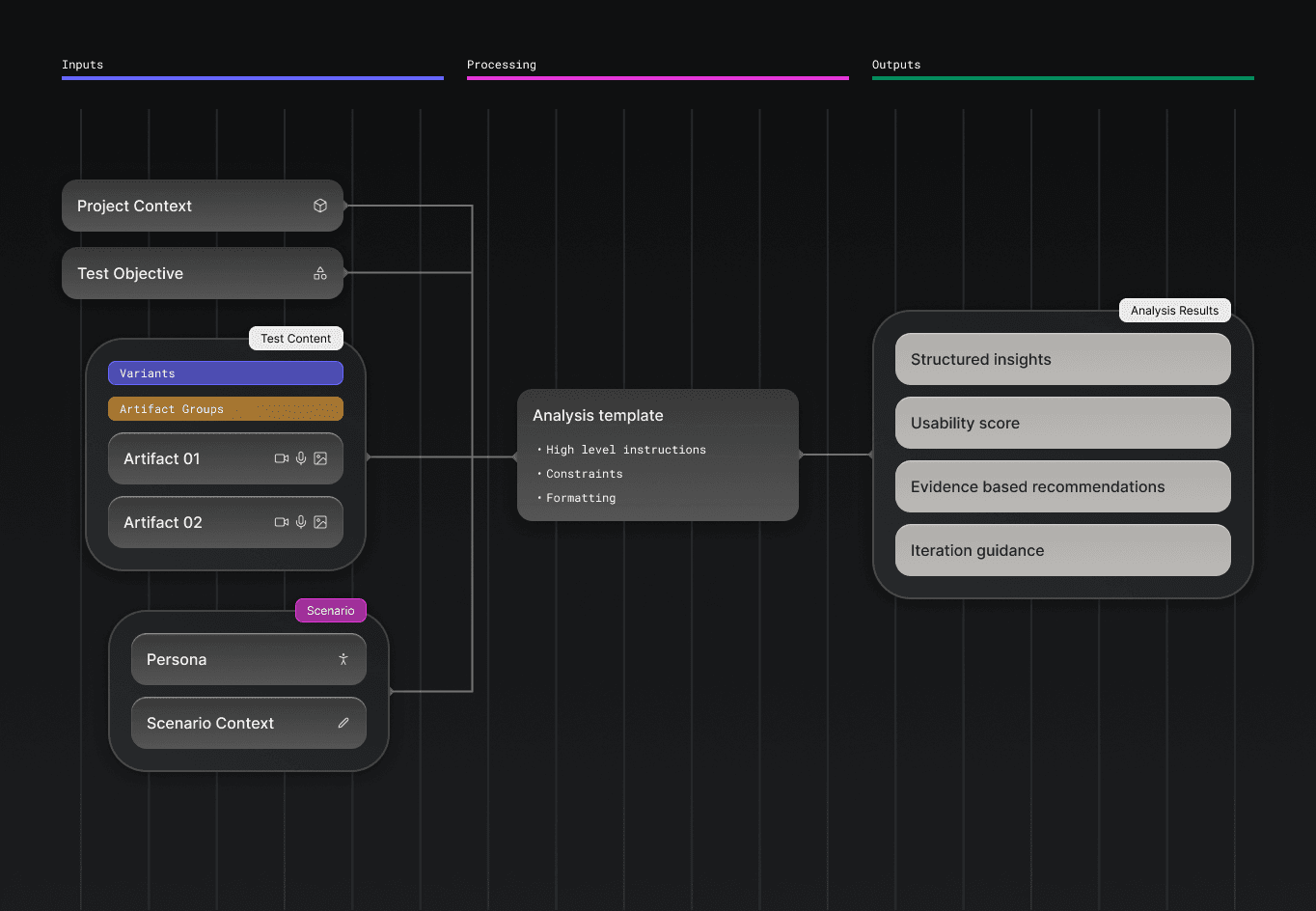
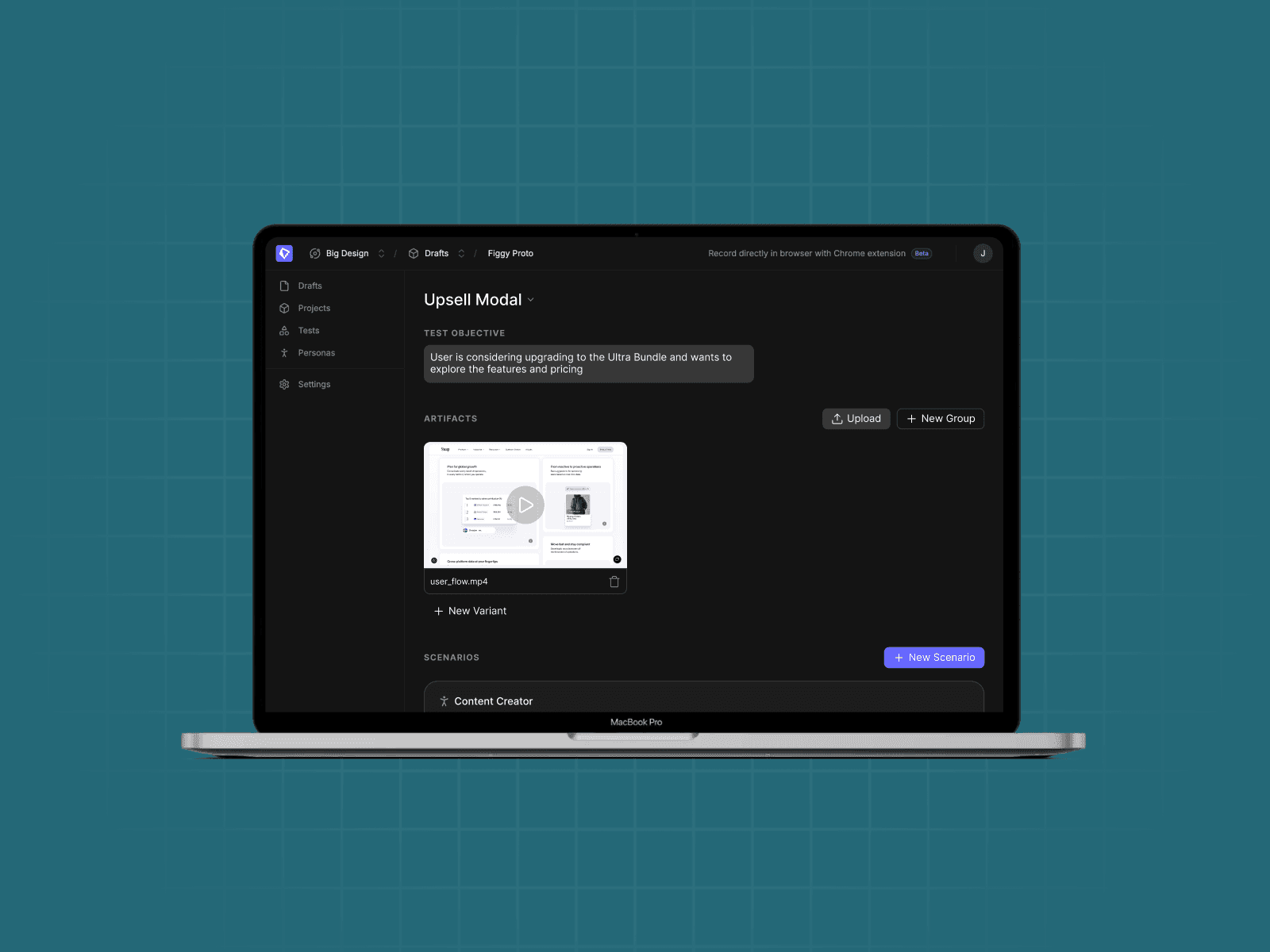
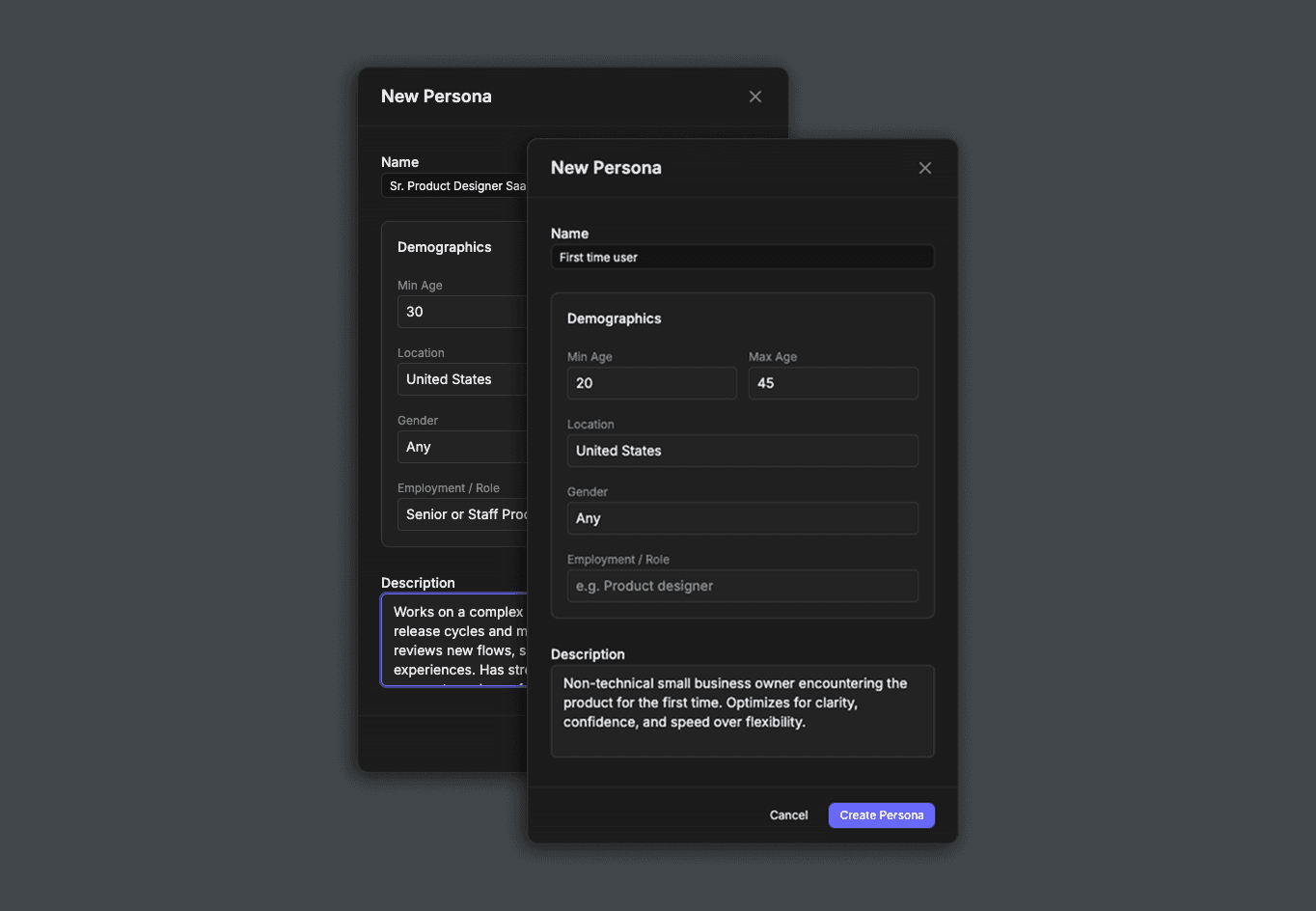
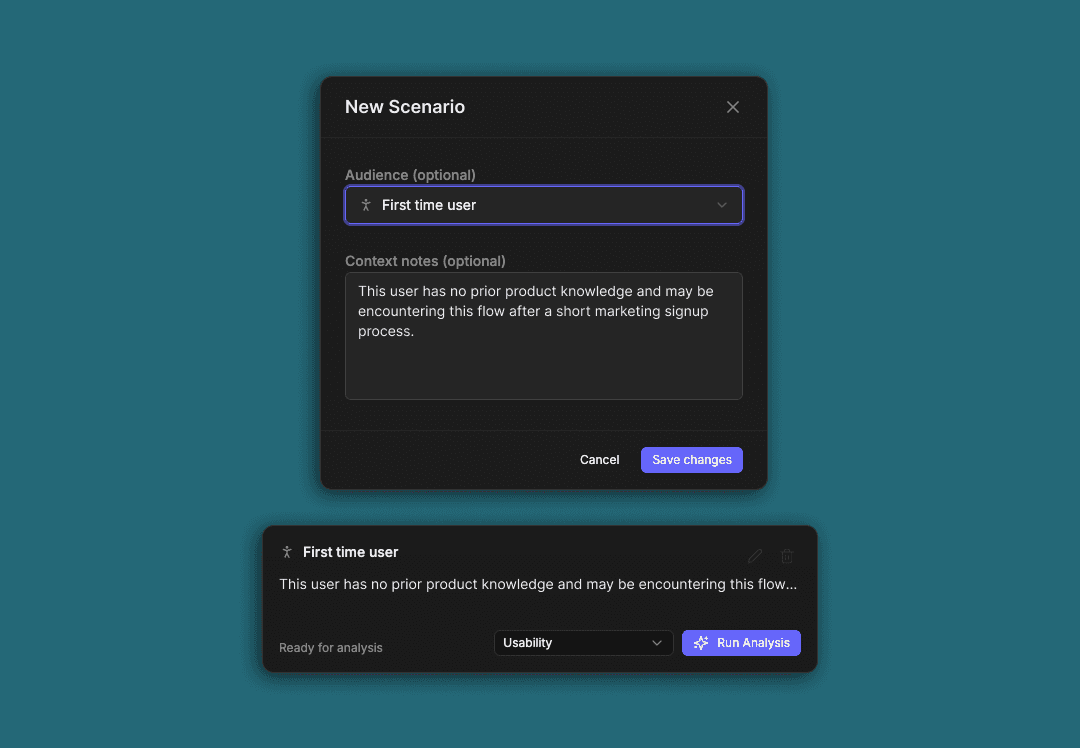
Vyska is built around a clear input → context → analysis → output pipeline. Artifacts, personas, and intent are explicit inputs, allowing the AI to reason with far more precision than free-form prompting.
Context is first-class
Feedback quality depends on scope. Context is layered at the artifact, test, project, and workspace level so insights stay grounded and relevant.
Guardrails over magic
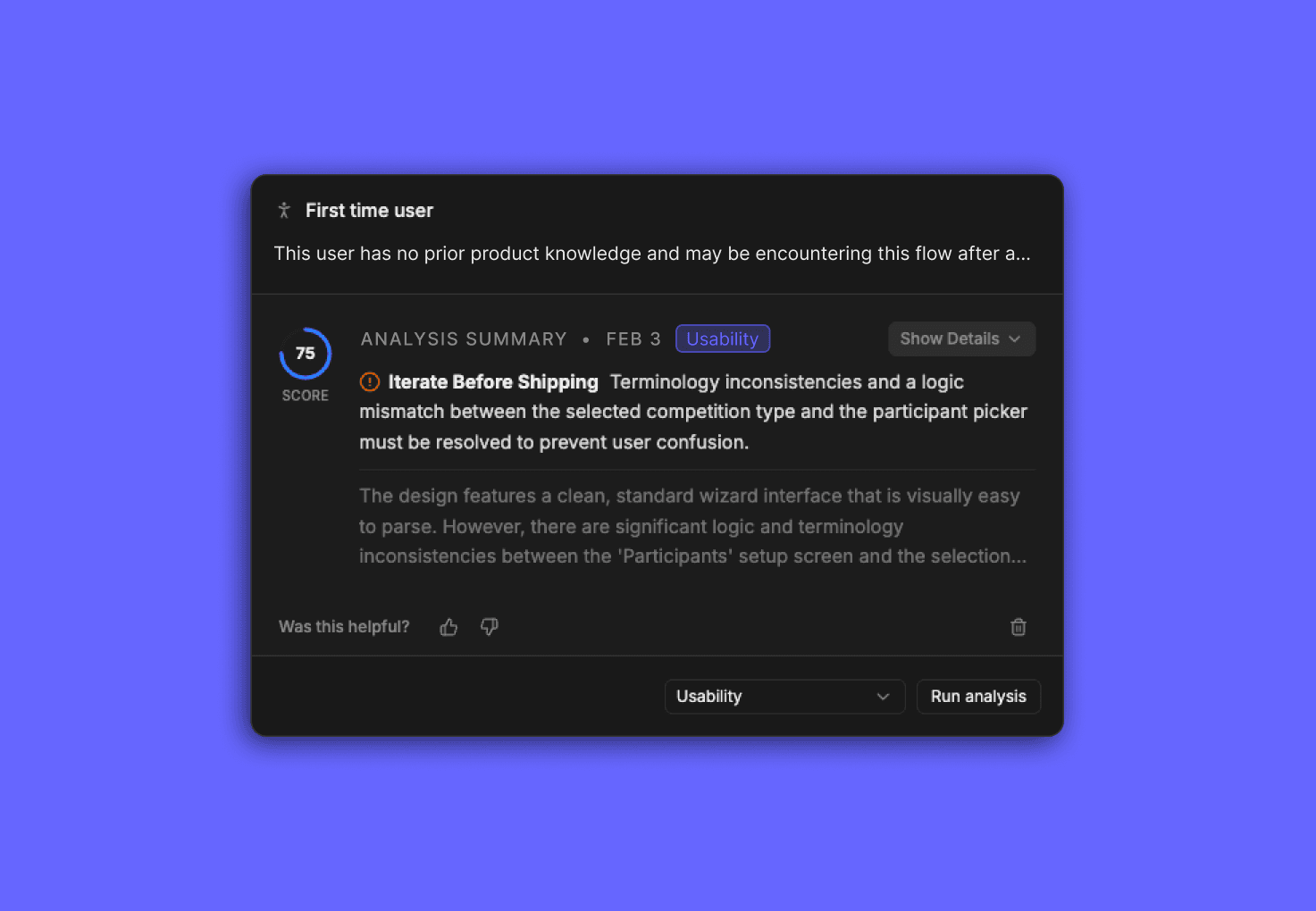
Instead of conversational output, insights are structured, reference specific evidence, and encourage follow-up. This builds trust and makes feedback easier to review, share, and challenge.
Human-in-the-loop by design
Users can refine intent, rerun analyses, and explore follow-up questions. AI accelerates thinking, it does not replace it.
Outcome
Vyska demonstrates how AI can augment UX research without undermining rigor or trust. More importantly, it reflects how I approach AI design inside organizations: starting with workflows, designing systems before screens, and applying strong product judgment to emerging technology.
Why This Matters
This work translates directly to teams building AI features inside existing SaaS products, internal tools, or platform surfaces. The value is not the novelty of AI, but designing the right constraints, interactions, and mental models so it delivers real utility.